Introduction
In CNC machining, machine utilization is one of the clearest indicators of real production performance. A machine may have advanced capabilities, high spindle speed, and excellent accuracy, but if it spends too much time waiting for setups, adjustments, or part changes, its actual output remains limited. This is why more manufacturers are paying attention not only to machining performance, but also to the systems around the machining process.
One of the most important of these systems is workholding. A self centering vise or fixture does far more than secure the part. It affects how quickly the setup can be completed, how reliably the part can be loaded, and how smoothly production can continue from one cycle to the next. When workholding is efficient, machine utilization improves because less time is lost before, between, and during jobs.
That is why efficient workholding has become such an important factor for CNC shops that want to increase real productive machine time.
Machine Utilization Depends on More Than Cutting Time
When shops look at utilization, they often focus on cycle time and spindle activity. Those factors matter, but they do not tell the full story. A machine only creates value when it is producing parts under controlled conditions. If operators spend too much time setting up the workpiece, checking alignment, or adjusting clamping, then available machine capacity is reduced long before the tool begins cutting.
This is especially common in shops with frequent changeovers or mixed production schedules. Even if each cycle is efficient, the machine may still sit idle while the next job is being prepared. Over time, that non-cutting delay becomes one of the biggest limits on output.
Efficient workholding helps reduce this problem by shortening the time needed to move from setup to production. It helps the machine spend more of the day doing productive work and less of the day waiting for the setup process to catch up.
Faster Setup Means More Available Capacity
One of the most direct ways workholding improves utilization is through faster setup. A clamping system that allows the part to be loaded quickly and predictably reduces the time between jobs and helps the machine return to production sooner. This may seem like a small gain on a single setup, but repeated across many jobs, the total effect becomes significant.
Every minute saved during setup adds back usable machine time. In practical terms, this creates hidden capacity without requiring another machine, more floor space, or major investment. Shops often look for productivity gains in new equipment or faster toolpaths, but many of the easiest gains come from making setup more efficient.
When workholding supports quick, repeatable, and stable loading, it helps turn lost minutes into productive time. That directly improves machine utilization in a way that is both practical and measurable.
Efficient Workholding Reduces Idle Time Between Jobs
Idle time is one of the biggest enemies of machine utilization. In many CNC shops, the machine sits ready while operators finish setup details, verify part location, or resolve clamping issues that should have been simpler from the beginning. These delays are costly because the machine is available but not productive.
Efficient workholding reduces this idle time by making the transition between jobs smoother. A better vise or fixture system helps the operator reach a stable setup faster and with fewer interruptions. This shortens the gap between one completed job and the start of the next.
In shops where multiple setups happen every day, these transition losses can be substantial. Improving workholding efficiency helps close those gaps and keeps the machine moving more consistently through the production schedule.
Repeatability Supports Higher Utilization
Repeatability is another major part of utilization. When a setup can be recreated consistently, the shop avoids wasting time rediscovering the same process. Operators can prepare recurring jobs more quickly because the workholding method is already proven and easier to repeat.
This is important because poor repeatability often creates hidden downtime. Even if the setup eventually works, extra alignment checks, part repositioning, and offset confirmation consume time that reduces the machine’s productive hours. These problems may not always be tracked clearly, but they affect utilization just as much as more obvious delays.
Efficient workholding supports repeatability by helping parts load in a known and dependable condition. This reduces setup variation and makes it easier to move into cutting without repeated correction. Over time, that repeatability helps the machine spend more time producing and less time waiting for setup recovery.
Better Workholding Improves Operator Efficiency Too
Machine utilization is closely linked to operator efficiency. A machine cannot stay productive if the person responsible for setup is slowed down by awkward clamping, unstable seating, or repeated manual adjustment. Even highly skilled machinists lose time when the workholding process is harder than it needs to be.
Efficient workholding helps operators work more effectively. It reduces the number of setup steps that require caution, correction, or rechecking. This allows the operator to keep production moving and spend more time on higher-value activities such as monitoring process quality, preparing the next job, or solving real technical issues.
This connection matters because utilization is not only about the machine itself. It is about how well the machine and the people around it can work together. Better workholding strengthens that relationship and helps the entire process run more efficiently.
High-Mix Production Makes Workholding Efficiency Even More Important
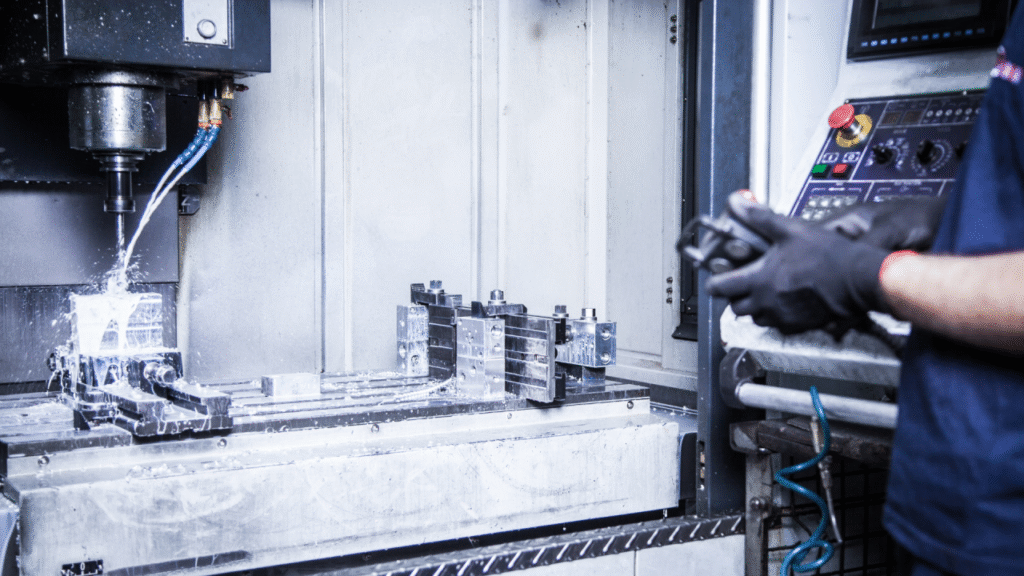
As more shops move toward high-mix, low-volume production, workholding efficiency becomes even more valuable. In this type of environment, setups change frequently, job variety is high, and machine schedules are constantly shifting. Under these conditions, even small setup delays are repeated many times and quickly reduce utilization.
An efficient workholding system helps the shop handle this complexity with less disruption. It supports faster job transitions, more predictable setups, and smoother daily workflow. This makes it easier to keep the machine active even when production is varied and demanding.
Without efficient workholding, high-mix production often creates too much non-cutting time. Machines may be technically busy on paper, but actual productive output remains lower than it should be. Improving the workholding process is one of the most practical ways to solve this issue.
Better Utilization Supports Better Profitability
Higher machine utilization has a direct effect on profitability. The more productive time a shop gets from existing equipment, the more value it creates from the same investment. Efficient workholding supports this by helping turn available machine hours into actual part production rather than setup loss.
This matters because the cost of machine ownership remains constant whether the machine is cutting or waiting. Improving workholding efficiency helps protect that investment by keeping the machine active under real shop conditions. It also supports stronger scheduling, faster throughput, and better response to new work.
For many CNC shops, this is one of the most practical productivity improvements available because it improves performance without requiring major disruption to the business.
Conclusion
Efficient workholding helps CNC shops increase machine utilization by reducing setup time, lowering idle time between jobs, improving repeatability, and helping operators work more effectively. It creates more productive machine hours from the capacity the shop already has.
In modern vise cnc production, utilization depends on more than machine speed alone. It depends on how smoothly the setup process supports the machine’s ability to keep running. Better workholding strengthens that support and helps turn available time into real output. For shops focused on practical improvement, efficient workholding is one of the clearest ways to increase machine utilization and strengthen daily production performance.
About the Author