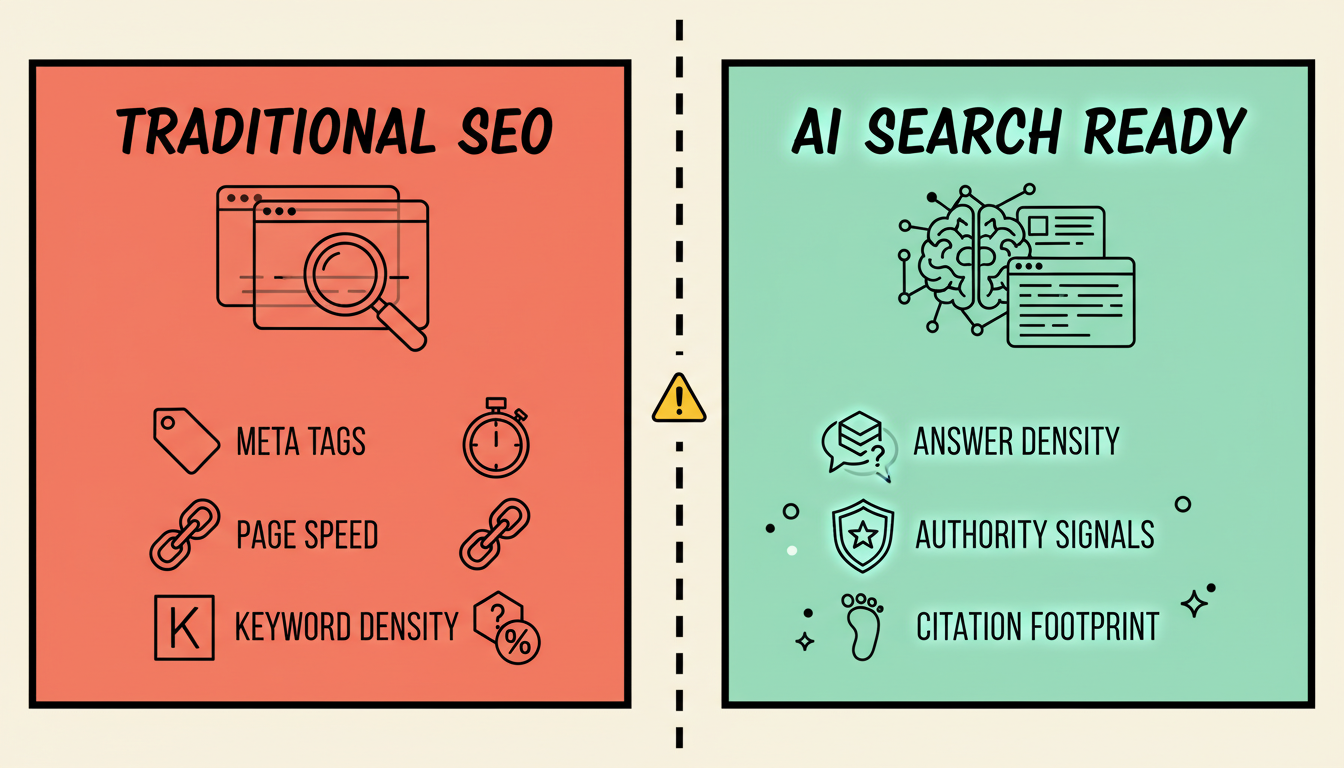
Your content ranks on Google. But AI assistants skip right past it. The gap between traditional SEO performance and AI search visibility is widening every quarter. Most sites are not structured for how AI models retrieve and synthesize answers.
This audit framework shows you exactly where to look.
What Most Audits Miss
Standard SEO audits check meta tags, page speed, and backlink profiles. They measure what search crawlers care about. AI search engines work differently. They parse content for direct answers, evaluate source authority across the entire web, and synthesize responses from multiple pages.
Your site might score 95 on a technical SEO audit and still be invisible to AI-powered search. The audit criteria need to change.
A site optimized for crawlers is not automatically optimized for language models.
What a Proper AI Search Audit Actually Evaluates
Content Structure and Answer Density
AI models favor content that delivers clear, structured answers within the first few paragraphs. Audit each high-value page for answer density. Does the page answer the target question directly? Or does it bury the answer under 500 words of context?
Check for proper heading hierarchy. Use H2 and H3 tags that mirror how users phrase questions. Bullet points and numbered lists make content easier for models to extract.
Schema Markup and Structured Data
FAQ schema, HowTo schema, and article structured data help AI models understand your content’s purpose. Audit your pages for missing or incorrect schema. Many sites implement schema on the homepage but neglect it on the pages that actually answer questions.
Source Authority Signals
AI models weigh credibility indicators heavily. External citations, author expertise markers, publication dates, and references to primary data all contribute. Audit whether your content includes these signals or reads like generic filler.
Cross-Platform Citation Footprint
Your audit should extend beyond your own site. Check whether your brand appears in knowledge bases, industry publications, and datasets that AI models train on or retrieve from. A strong answer engine optimization strategy maps your citation footprint across the sources AI models actually reference.
Five Steps to Run Your AI Search Audit
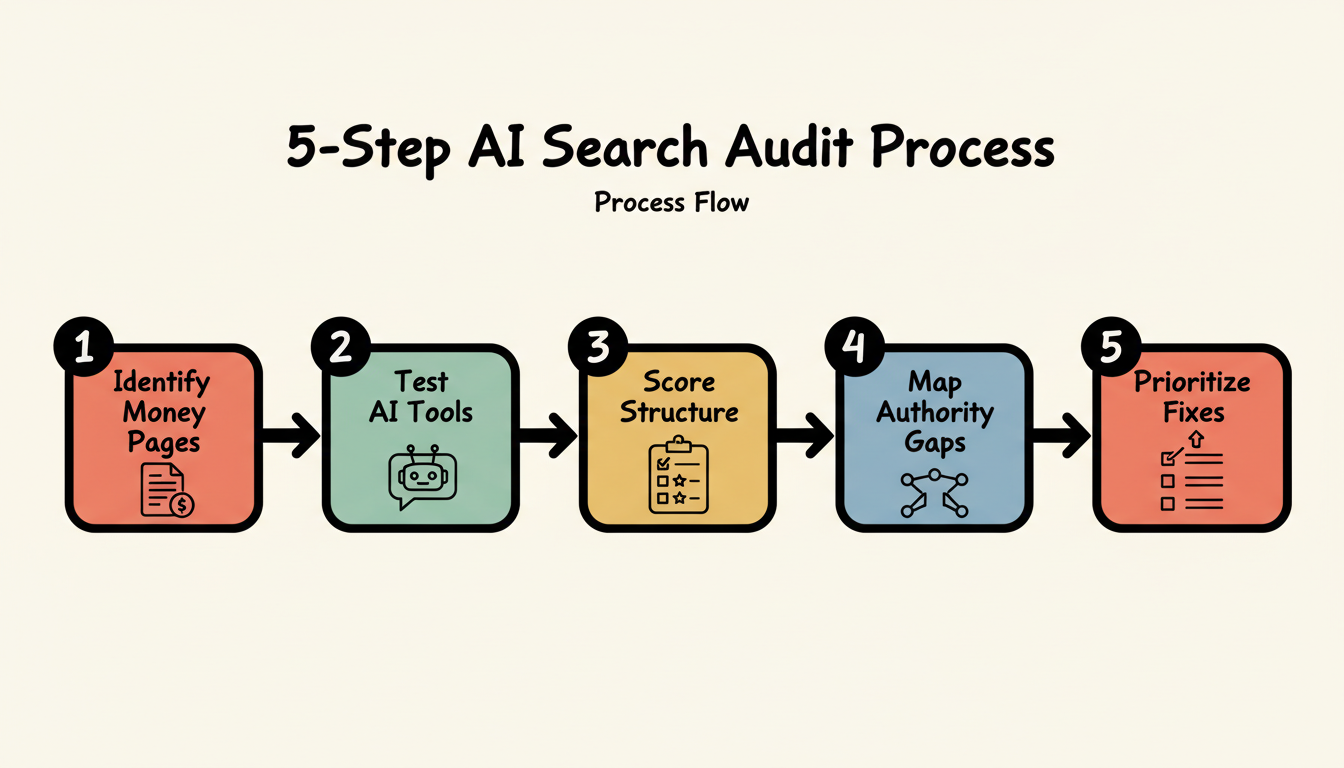
- Identify your money pages. Pick the 20 pages that drive the most revenue or conversions. These are your audit priority.
- Test against AI search tools. Query ChatGPT, Perplexity, and Google AI Overviews with the questions your pages target. Document whether your site appears in the response or citation list.
- Score content structure. Rate each page on answer directness, heading clarity, list usage, and schema implementation. Use a 1-5 scale for each factor.
- Map authority gaps. Compare your citation footprint against competitors who do appear in AI answers. Note where they have external mentions that you lack. A thorough answer engine optimization audit quantifies these gaps with hard numbers, not guesswork.
- Prioritize fixes by impact. Rank pages by search volume multiplied by the gap score. Fix the highest-impact pages first.
The Competitive Window Is Closing
AI search adoption is accelerating. Every month you delay this audit, competitors are restructuring their content and earning citations you could have claimed.
The sites that audit now will build early authority signals that compound over time. AI models develop preferences for sources that consistently deliver structured, accurate answers. Being first matters more than being perfect.
Your traditional SEO performance bought you time. It did not buy you a permanent advantage. The audit is step one. What you do with the findings determines whether your site stays visible in the next generation of search.
About the Author