In machining, productivity is often discussed in terms of spindle speed, automation, and tooling strategy. While those factors are certainly important, they do not tell the whole story. Many shops invest in better machines and software but continue to face problems such as inconsistent accuracy, long setup times, and unstable cutting conditions. In many cases, the issue is not the machine at all. It is the workholding.
A modern machining process depends on more than cutting power. It depends on how securely, accurately, and efficiently the workpiece is held in place. When a shop continues to rely on outdated or overly generic clamping methods, it often creates limitations that affect the entire production cycle. Upgrading the workholding system may not seem as exciting as buying a new machine, but in practice it can deliver immediate improvements in precision, repeatability, and overall efficiency.
Here are five important reasons why more manufacturers are upgrading their workholding systems today.
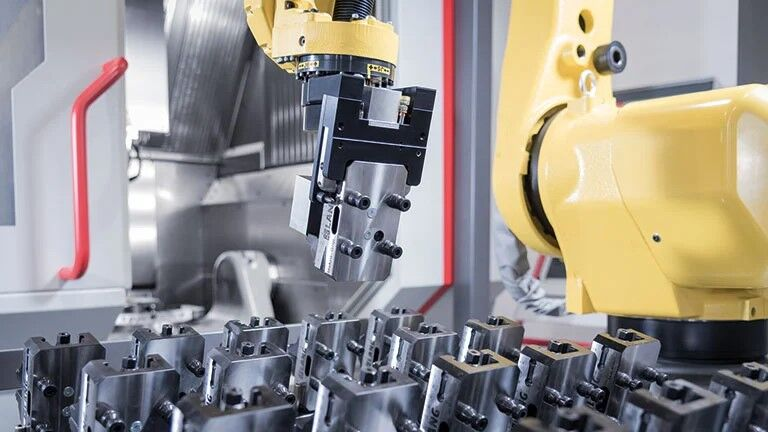
1. Better Workholding Improves Machining Accuracy
Accuracy begins long before the tool touches the material. It starts with how the part is positioned and supported. If the clamping system allows even slight movement, the machining result can be affected. Dimensional errors, poor surface finish, and inconsistent tolerances often trace back to unstable workholding rather than to the cutting process itself.
A stronger and more precise clamping system provides a much better foundation for accurate machining. When the workpiece stays in the correct position throughout the operation, the machine can execute the programmed path more reliably. This is especially important in precision manufacturing, where even minor variation can create quality issues or additional inspection work.
For shops working on complex parts, upgrading to a dedicated 5 axis vise can help provide better positioning stability while also supporting more advanced machining strategies.
2. Improved Repeatability Saves Time on Every Setup
One of the hidden costs in machining is setup variation. If operators need to spend extra time aligning the part, checking offsets, or compensating for inconsistent positioning, productivity drops even before the first chip is made. Over dozens or hundreds of parts, that lost time becomes significant.
Modern workholding systems are designed not only to hold the part, but to do so in a repeatable way. This means the same part can be loaded again and again with far less adjustment. Better repeatability reduces operator workload, shortens setup time, and makes process control easier across multiple runs.
This is particularly valuable for shops doing small-batch production, repeat orders, or high-mix manufacturing. A repeatable setup gives machinists more confidence and reduces the need for constant correction. In many real-world shops, this improvement alone is enough to justify a workholding upgrade.
3. Modern Vises Offer Better Access for Complex Parts
As part geometry becomes more complex, machining access becomes more important. Traditional vises may provide enough holding force, but they often block important surfaces or limit the tool’s approach angle. This forces extra setups, more repositioning, and more chances for cumulative error.
A modern workholding system is designed with accessibility in mind. Instead of simply clamping the part as low as possible, it helps expose more of the workpiece so that more surfaces can be machined in fewer operations. This is one of the biggest advantages of specialized solutions used in multi-face and 5-axis machining.
A properly designed 5 axis vise helps reduce interference and makes it easier to machine several sides of a part in one setup. For shops looking to reduce setup counts and improve consistency, this can be a major advantage.
4. Upgraded Workholding Supports Higher Productivity
When people think about productivity, they usually focus on faster cutting. But faster cutting only works when the part is held securely enough to support it. If the setup is weak or unstable, operators may have to reduce feed rates, take lighter cuts, or stop frequently to check part position. In that situation, the machine’s full capability is never really used.
Upgrading workholding can support better productivity in several ways. It can reduce setup time, allow more stable machining, shorten changeovers, and make it easier to standardize the process. Even small improvements in these areas can create a noticeable gain over time.
This is why evaluating a broader cnc vise range is often a smart step for buyers. Different jobs require different clamping formats, jaw configurations, and support levels. A more complete product range gives shops the flexibility to match the workholding solution to the actual application instead of forcing every part into the same setup style.
5. A Better Workholding Strategy Helps Future-Proof the Shop
Manufacturing is becoming more demanding every year. Customers want shorter lead times, tighter tolerances, and more complex parts. At the same time, shops are expected to improve efficiency and remain competitive. Under those conditions, outdated workholding quickly becomes a bottleneck.
Upgrading the workholding system is not only about solving today’s problems. It is also about preparing for the future. A more advanced vise or fixture system helps the shop handle new materials, more difficult geometries, and more demanding production requirements. It supports process stability as the business grows and makes it easier to adapt to new machining opportunities.
This is especially true for shops that plan to expand their use of 5-axis machining or modular fixture systems. The right vise becomes part of a larger process strategy rather than just a standalone tool. When workholding is chosen carefully, it can continue creating value far beyond a single project or machine.
Final Thoughts
Many machining problems are treated as tooling issues, machine issues, or programming issues when the real cause is much simpler. If the workpiece is not being held correctly, every other part of the process becomes harder to control. That is why upgrading workholding is often one of the most practical and cost-effective ways to improve machining performance.
A stronger workholding strategy can improve accuracy, reduce setup time, support better access, and increase productivity across the shop floor. It also gives manufacturers a better foundation for future growth as machining demands continue to increase.
In the end, modern machining requires modern support. Shops that invest in better workholding are not just buying a new vise. They are building a more reliable and competitive production process.
About the Author